


At the latest TUNL Talks, we sat down with Madison Barefield, founder of Not I But We, to unpack one of Shopify's most powerful and underused features: Shopify Markets.
Not I But We started as a scrunchie-making operation in a garage during COVID. Madison was working at a safe house for survivors of trafficking and gender-based violence, and watched women receive incredible care but leave with no real economic opportunities. So she built one. Six years later, Not I But We employs 13 women from their own workshop in Cape Town, runs a quarterly training programme, and ships handmade accessories to customers across the US, Europe, and beyond.
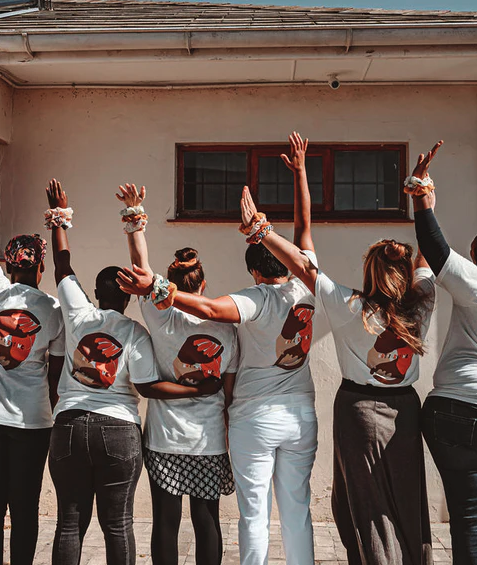
Their primary markets? The US and Switzerland. And a big part of how they got there was Shopify Markets.
If you're on Shopify and thinking about selling internationally — or already are and it feels messier than it should — this one's for you.
Shopify Markets is a Shopify feature that lets you tailor your ecommerce store for different countries or regions, without building separate websites.
One Shopify store can show a US customer a dollar price, a winter-themed banner, and a curated product selection, while showing a South African customer a rand price, a summer theme, and a completely different range — all automatically, based on where the visitor is browsing from.
Before this existed, doing this properly meant maintaining multiple Shopify instances with separate domains, separate inventory, and separate designs. Shopify Markets collapses all of that into one. It's been around for a few years, but as Madison put it: most merchants still don't know how flexible it actually is.
Before you touch a single setting, you need to decide what your markets actually are.
In Shopify, a market is a group of countries you want to price and present to in a similar way. That's it. The question is: which countries belong together, and which need their own treatment?
The simplest setup is two markets: South Africa and the rest of the world (your 'international market'). That alone lets you price internationally without any of the complexity.
Not I But We have three: South Africa, North America (primarily the US), and International (which covers Europe, Australia, and the rest of the world). Three markets because those regions have meaningfully different price points, different seasonal patterns, and different shipping costs.
You don't need to mirror that setup. Start with where you actually have customers or where you're actively trying to build them. Most basic Shopify plans support up to three markets. So South Africa, your primary international market, and a catch-all rest-of-world is a solid starting structure for most businesses.
💡 The key principle: group countries together when you'd price and present to them similarly. Separate them when you wouldn't.
Shopify Markets lets you customise your store's look and feel per market.
At the moment it's summer in the Northern hemisphere and winter in the South. Not I But We's US customers see a summer-themed homepage with gift ideas under $25 and a US shipping deadline. South African customers see a wintry homepage with gifts under R250. Same store, completely different experience, served automatically by geography.
You can customise banners, collections, featured products, promotional messaging, and footer content per market.
💡 One thing to know upfront: not every theme supports this. Not I But We paid for a once-off cost for a theme that enables market-level design editing. Check yours before you start building.
A direct rand-to-dollar conversion usually gets it wrong in both directions. Your product looks cheap to international customers (which undermines trust in premium or ethically made categories), and it doesn't account for the real cost of serving that market — duties, platform fees, and shipping costs.
Not I But We prices scrunchies at around R60 locally. In the US, the same scrunchie is $6. Switzerland is priced even higher because shipping costs more and the market bears it. Madison's approach: look at what comparable brands charge in that market, then test. There's no perfect formula. Her rough rule of thumb is at least double your rand price in USD.
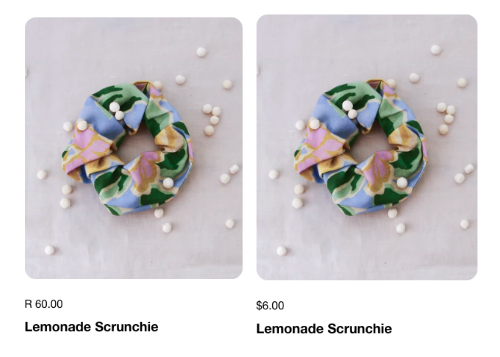
Within Shopify Markets you have two options for pricing: fixed prices you set manually per market, or a multiplier rule (e.g. US prices are always 2x your ZAR base price) that applies automatically.
Not I But We set their prices manually to keep full control, but the multiplier approach is practical if you're adding products often and don't want to update prices every time something goes live. Both are valid. What you want to avoid is relying on live currency conversion for your product prices. That turns your $6 scrunchie into $5.87 one day and $6.14 the next, which looks messy and breaks your promotional maths.
💡 Even within a single market, customers in different countries can see accurate live shipping costs to their door, while the product price stays the same. The TUNL Shopify integration surfaces live shipping rates directly at checkout. No integration? Set up manual shipping zones within your market instead.
Not every product belongs in every market. Some things are too heavy or fragile to ship across the world cost-effectively. Some are out of season. Some are made in limited quantities and better kept local.
In Shopify Markets you can control which products are visible per market, down to the variant level. Not I But We actually create separate product listings for market-specific items rather than showing the same product with half the variants sold out. Sold-out variants quietly erode confidence while a clean, complete catalog builds it.
Once you're selling in multiple countries, one email to everyone stops making sense. A US promotion sent to your South African list is noise. A South Africa-only product launch sent to your US customers is confusing.
Not I But We fixed this by adding a country field to their signup popup. Now they know where their subscribers are and can send the right message to the right market. They do this manually in Mailchimp, which works at their current scale, however there are many email marketing platforms available based on your needs.
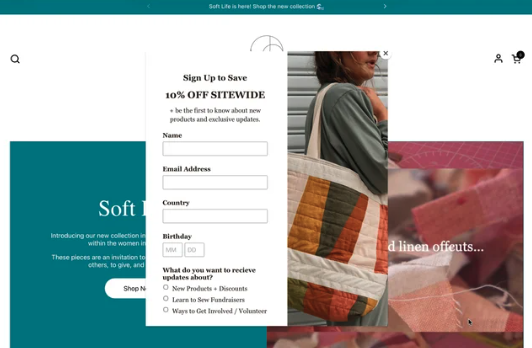
💡Building that email list via a website popup is an underused growth lever. If 3-4% of people visiting your website sign up to your email list, that compounds fast.
If your store is based in South Africa using a local gateway like PayFast or Yoco, customers see prices in their local currency through the whole experience, but the payment processes in rands. Their bank does the conversion on their end.
For most customers, this isn't a dealbreaker, especially when there's trust in the brand. It's worth knowing about, but it shouldn't stop you from getting started.
Find it: Settings > Markets in your Shopify admin.
Check your theme first: Confirm it supports market-level design customisation before you build anything out.
Start with one market: Get your primary international market right before adding more. Most basic plans support up to three markets.
Set your pricing approach: Decide whether you'll set fixed prices per market manually, use a multiplier rule, or a combination. Either way, avoid live currency conversion for product prices.
Connect your shipping rates: If you're on TUNL, connect the Shopify integration to surface live TUNL rates at checkout so customers see accurate international shipping costs before they pay.
Curate your catalog: Hide anything that doesn't make sense to sell or ship in a given region.
What Madison and Not I But We have built is proof that you don't need a big team or a complex setup to sell internationally from South Africa. One Shopify store, the right configuration, intentional pricing, and a product people want.
Shopify Markets is the tool which enables your strategy of who you're selling to, what you're charging them, and how you make the experience feel local even when it isn't.
If you're already shipping with TUNL, you've solved one of the hardest parts. The next step is making sure your store is set up to convert international visitors when they land.
Want help thinking through your international store setup? Talk to the TUNL team, we're good at this stuff.
Not I But We is a Cape Town-based social enterprise creating dignified work for survivors of trafficking and gender-based violence. Shop their products at notibutwe.com.
.png)
